CultureEvery year, Americans observe Memorial Day, a federal holiday dedicated to honoring military personnel who died in service. While many associate its origins with post-Civil War efforts by veterans' organizations, a powerful and often overlooked history points to its true genesis in the actions of newly freed African Americans in Charleston, South Carolina, shortly after the Civil War ended.
On May 1, 1865, a momentous ceremony, now recognized by many as the "First Decoration Day," unfolded at the former Washington Race Course. This site had been tragically transformed into an outdoor Confederate prison camp during the war, where at least 257 Union soldiers perished from exposure and disease, hastily buried in a mass grave behind the grandstand. When Union troops finally captured Charleston in February 1865, many of its white residents had fled, leaving behind a city where African Americans, recently liberated from slavery, were a dominant presence.
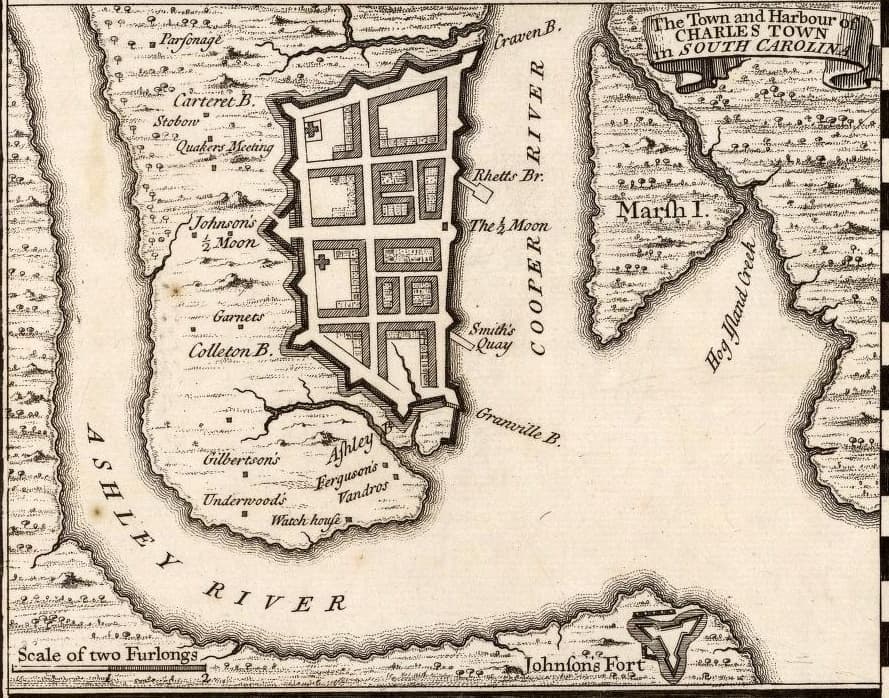
Among the first Union forces to enter the city were the 21st United States Colored Infantry and the 55th Massachusetts Infantry, both composed of Black soldiers, who marched through the streets singing songs of liberation. In the weeks that followed the Confederacy's surrender, the Black residents of Charleston, in collaboration with white missionaries and teachers, undertook the solemn and arduous task of properly honoring the Union dead. They spent ten days meticulously exhuming bodies from the mass grave, reinterring each soldier individually, and transforming the burial ground. Their efforts included landscaping the site, constructing an enclosure, and erecting an archway over the entrance inscribed with the poignant words, "Martyrs of the Race Course."
The commemoration on May 1, 1865, was a grand and deeply symbolic event. A procession of approximately 10,000 people, predominantly freedmen, marched to the newly consecrated cemetery. The parade included 3,000 Black schoolchildren, recent enrollees in the burgeoning Freedmen's schools, who carried armloads of roses and lilies while singing "John Brown's Body." Women adorned the graves with flowers and wreaths, and contingents of Union troops, including the 54th Massachusetts, 34th, and 104th U.S. Colored Troops, performed military drills. The day was further marked by speeches from Black ministers and white northern missionaries, religious readings, and communal picnics. This elaborate observance was witnessed and reported by correspondents from prominent national papers, including *The New York Tribune* and the *Charleston Daily News*.
Historian David W. Blight, a professor of American history at Yale University and director of the Gilder-Lehrman Center for the Study of Slavery, Resistance and Abolition, brought this pivotal event to wider public attention through his extensive research. Blight's discovery of a handwritten soldier's account referencing a "First Decoration Day" in Charleston in 1865, found in Harvard's Houghton Library archives, led him to a corroborating *New York Tribune* article. His 2001 book, "Race and Reunion: The Civil War in American Memory," provides a detailed account, presenting a compelling argument that this event represents the true origins of Memorial Day.

Blight has stated, "This was the first Memorial Day. African Americans invented Memorial Day in Charleston, South Carolina. What you have there is black Americans recently freed from slavery announcing to the world with their flowers, their feet, and their songs what the war had been about. What they basically were creating was the Independence Day of a Second American Revolution.” The significance of this Charleston event lies in its powerful declaration of the meaning of the Civil War by those who had the most to gain from Union victory—emancipation. The freed people defined the Union soldiers as martyrs to the cause of ending slavery, a profound act of remembrance and political assertion.
Despite its clear historical precedence, the African American origins of the holiday were largely suppressed or forgotten in the broader national memory. Reports indicate that this foundational narrative was actively obscured, particularly during the Jim Crow era, as ruling classes in both the North and South sought to reunite the country under a more generalized narrative of political mourning, often sidelining the diverse political issues for which the Black community had fought and sacrificed.
Official national recognition of Memorial Day emerged later. General John A. Logan, commander-in-chief of the Grand Army of the Republic, a Union veterans organization, issued General Order No. 11 on May 5, 1868, designating May 30, 1868, as the first official "Decoration Day" for strewing flowers on the graves of Union comrades. Figures like President William McKinley and New York Senator Chauncey Depew later credited General Logan with formalizing the annual floral decoration of graves. The holiday's scope expanded over time to honor all American war dead, especially after the Spanish-American War and World War I. In 1971, Congress moved its observance to the last Monday in May and standardized its name as "Memorial Day."
While the federal government declared Waterloo, New York, as the official birthplace of Memorial Day in 1966, and other towns like Columbus, Georgia, and Columbus, Mississippi, also lay claim to early observances, the Charleston event of 1865 stands as a powerful and meticulously documented precursor. The U.S. Department of Veterans Affairs acknowledges the Charleston observance as "one of the most important early Memorial Day observances." The role of African Americans in Memorial Day observations continued for decades, as highlighted by Comrade Boyle of Louisiana in 1907, who asked, “Who are the ones that do it down South but the Black people?” M.C. Maxfield at a 1911 DC ceremony similarly emphasized the Black soldier's important participation.
This historical account underscores not just the origins of a national holiday, but also the enduring legacy of Black Americans in shaping the nation's memory and its understanding of freedom and sacrifice. The act of remembrance by freed people in Charleston, South Carolina, remains a powerful testament to their agency and their profound definition of the Civil War's true meaning, a legacy that continues to resonate today.