 Culture
Micron Hits $1 Trillion Market Cap on AI Boom
Micron Technology just made history. The semiconductor giant blasted past a $1 trillion market capitalization this week, marking a monumental achievement driven by the explosive demand for its specialized memory chips in the burgeoning artificial intelligence sector. This isn't just a win for Micron; it signals a new era for memory, transforming what was once a cyclical industry into a powerhouse fueling the future of tech.
The Boise, Idaho-headquartered company saw its stock surge by an astonishing 19% in a single trading session on Tuesday, May 26, 2026, pushing its valuation past the trillion-dollar mark for the first time. Shares closed that day around $895.88. The momentum didn't stop there; by Friday, the stock added another 5%, closing at a new record high of $971. This incredible ascent has seen Micron's stock more than triple in value since the beginning of the year, cementing its position as one of the S&P 500's strongest performers. Over the past year, its shares have climbed approximately 700% to 830%.
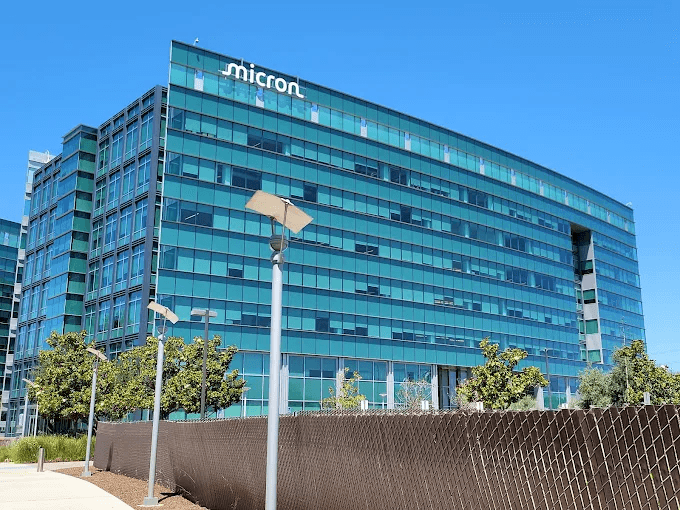
This historic valuation places Micron in the "rarefied air" of tech titans like Apple, Microsoft, and Nvidia, making it the 10th most valuable U.S. company, now outranking giants such as Walmart and Eli Lilly. The ripple effect was felt across the memory chip sector, with SanDisk stock reportedly rising 7%, Western Digital gaining 8%, and Seagate up 4%, contributing to a more than 1% gain for the broader Nasdaq. The 19% single-day jump on May 26 was Micron's best performance in a single day since 2011, underscoring the market's enthusiastic reaction.
Micron's journey began modestly in 1978, founded by Ward Parkinson, Joe Parkinson, Dennis Wilson, and Doug Pitman in a dental office basement in Boise. Initially a semiconductor design consulting firm, it transitioned into manufacturing in 1981, producing 64K DRAM chips. The company quickly gained recognition for its innovations, including the world's smallest 256K DRAM. Today, Micron stands as one of the "Big Three" global computer memory manufacturers, alongside South Korean powerhouses Samsung Electronics and SK Hynix, and remains the only major American company in this critical field.
The company specializes in a range of essential computer memory and data storage products, including dynamic random-access memory (DRAM), flash memory, High Bandwidth Memory (HBM), and solid-state drives (SSDs). These components are the backbone of modern technology, powering everything from massive data centers and everyday smartphones to cutting-edge artificial intelligence systems and autonomous vehicles. This foundational role has been amplified by the current tech landscape.

The primary engine behind Micron's recent meteoric rise is the explosive, almost insatiable, demand for memory chips, particularly its High Bandwidth Memory (HBM). This specific type of memory is now considered essential infrastructure for training large language models and running AI inference at scale. Every new data center buildout and next-generation GPU, from industry leaders like Nvidia or AMD, requires stacks of advanced memory, creating an unprecedented global shortage and a "structural scarcity" in the market. Micron is one of only three companies globally with the capability to manufacture HBM at scale.
Sanjay Mehrotra, Micron's Chairman, President, and CEO since 2017, has been a central figure in steering the company through this boom. He publicly confirmed that Micron had already sold out its entire 2026 supply of high bandwidth memory chips. Mehrotra further elaborated on the market situation, describing the memory supply as a "structural scarcity" and noting that Micron is currently only able to fulfill between 50% to 67% of its key customers' medium-term HBM and DRAM demand. This significant supply-demand imbalance has given Micron considerable pricing power.
Wall Street analysts have taken notice, issuing highly bullish calls. On May 26, 2026, UBS analyst Timothy Arcuri, a consistently top-ranked analyst, dramatically raised his price target for Micron from $535 to an astounding $1,625, a 204% hike, setting a new Street high. Arcuri argued that Micron deserves a valuation multiple on par with Nvidia due to its pivotal role in the AI infrastructure buildout. He projected that Micron could generate over $400 billion in cumulative free cash flow between 2027 and 2029, with earnings per share (EPS) potentially staying comfortably above $100 through at least 2029. Arcuri stated, "we see no reason why MU should trade a whole lot differently than NVDA in terms of P/E," suggesting long-term agreements across the memory industry could fundamentally alter Micron's earnings profile, allowing it to "trade some near-term revenue for demand visibility and a smoother earnings profile." Other firms echoed this sentiment, with DA Davidson raising its price target to $1,500 from $1,000 and Mizuho increasing its target to $1,150 from $800, both maintaining Buy/Outperform ratings. On May 29, 2026, Susquehanna analyst Mehdi Hosseini further elevated his price target to $1,750 from $600, maintaining a Positive rating, citing firm checks indicating Q2 2026 DRAM average selling prices (ASPs) were trending up 50-60% quarter-over-quarter, ahead of expectations, and NAND ASPs were trending unchanged at up 75-100% quarter-over-quarter.
This shift is clearly reflected in Micron's financial results. For its fiscal second quarter of 2026, which concluded on February 26, 2026, the company reported revenue that nearly tripled from the previous year, reaching $23.86 billion, significantly surpassing estimates. Its operating margin expanded dramatically from 22% to 67.6%, and adjusted earnings per share hit $12.20, comfortably beating Wall Street consensus. The Cloud Memory Business Unit alone nearly doubled its revenue to $5.28 billion, boasting impressive 66% gross margins. Looking ahead, management projects record revenue of $33.5 billion for the third quarter of fiscal 2026, representing a staggering 260% year-over-year increase.
Micron's remarkable ascent underscores a fundamental transformation in the memory chip business. Historically viewed as a cyclical commodity, prone to wild swings between supply gluts and shortages, the industry's dynamics have been "rewired" by the unprecedented and sustained demand from artificial intelligence. Long-term supply agreements are now providing more predictable revenue streams and a smoother earnings profile, signaling a structural change for the company and the broader semiconductor market. This evolution positions Micron not just as a hardware provider, but as a crucial enabler of the AI revolution that is reshaping global technology and, by extension, culture itself.
As the world races to build out the infrastructure for the next generation of AI, Micron's central role in supplying the essential memory chips appears solidified. The "structural scarcity" described by its CEO, coupled with its proven manufacturing capabilities and strategic positioning, suggests that the company is poised to continue its influential trajectory in the tech landscape, with its financial performance reflecting its deepening impact on how data is processed and stored globally.