 CultureCulture
Micron Technology, the Idaho-based semiconductor powerhouse, has reportedly seen its stock shoot up by an incredible 162% year-to-date as of mid-May 2026. This monumental surge is directly linked to the booming demand for high-bandwidth memory (HBM), a critical component in the rapidly expanding artificial intelligence sector.
The company’s impressive performance signals a significant comeback after a tough fiscal 2023, where Micron faced a substantial oversupply of memory chips, resulting in its revenue halving and the company incurring losses. However, the tides began to turn in 2024, with Micron successfully returning to both revenue growth and profitability, setting the stage for its current market dominance.
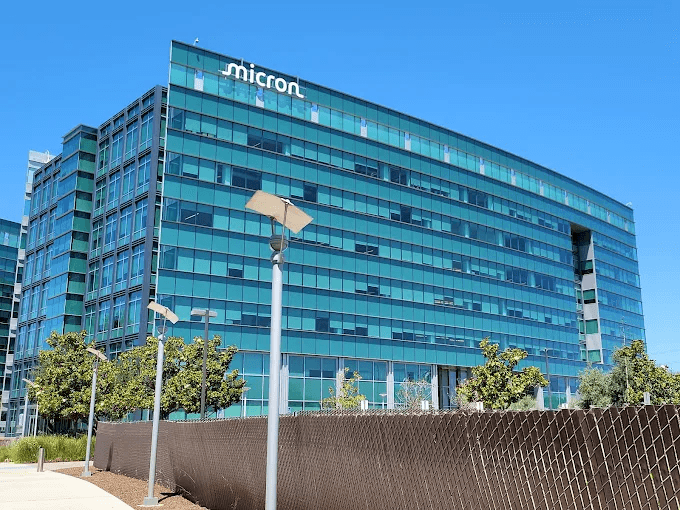
At the core of Micron’s resurgence are its strategic advancements in HBM technology. In July 2023, the company unveiled its HBM3E memory, boasting an impressive 9.6 Gbit/s/pin data processing speed. By the close of that same month, Micron had already begun supplying samples of its 8-high (24GB) HBM3E to leading AI chip manufacturers, including industry titan Nvidia. Further cementing its technological edge, Micron finalized the development of its 12-stack HBM3E in September 2024, also providing samples to key players like Nvidia.
A pivotal moment arrived on February 26, 2024, when Micron announced the commencement of mass production for its HBM3E memory. This advanced memory solution, specifically the 24GB 8-high HBM3E, began shipping in Nvidia’s H200 Tensor Core GPUs during the second calendar quarter of 2024. This move was crucial for Nvidia, diversifying its HBM suppliers beyond its prior exclusive relationship with SK Hynix. Micron’s 12-Hi HBM3E also entered mass production in the third quarter of 2024, with full-scale volume shipments ramping up in early 2025 to meet the escalating AI-driven demand.
Micron’s financial results clearly reflect this burgeoning demand. In September 2024, the company reported robust fiscal Q4 2024 figures, showcasing a remarkable 93% year-over-year revenue growth. This growth was largely propelled by the strong ramp of its data center DRAM products and its industry-leading HBM. The momentum continued into fiscal Q2 2026, which ended February 26, 2026, where revenue jumped nearly 200% year-over-year to $23.86 billion, with gross margins reaching approximately 74.9%—figures that were once considered unimaginable for a memory company.

Key figures within Micron have consistently underscored the transformative impact of AI on the memory market. Sanjay Mehrotra, President and CEO of Micron Technology, stated in March 2026, “In the AI era, memory has become a strategic asset for our customers, and we are investing in our global manufacturing footprint to support their growing demand.” He further elaborated in May 2026, remarking that “AI is in very early innings; you just saw at GTC how much advances are being made in AI. And memory is a strategic asset; you need more memory, you need faster performance memory in order for AI to be able to deliver its full capabilities.” Mehrotra also highlighted a significant supply-demand imbalance, indicating that Micron “can currently only meet roughly 50% to 66% of customer demand” for AI-focused HBM.
Micron’s CFO, Mark Murphy, emphasized the competitive advantages of the company’s 12-stack HBM3E, noting its “20% lower power consumption and 50% greater capacity than a competitor’s 8-stack HBM product.” Sumit Sadana, Executive Vice President and Chief Business Officer at Micron, echoed the sentiment regarding AI’s reliance on memory. In February 2024, Sadana affirmed that “AI workloads are heavily reliant on memory bandwidth and capacity, and Micron is very well-positioned to support the significant AI growth ahead through our industry-leading HBM3e and HBM4 roadmap, as well as our full portfolio of DRAM and NAND solutions for AI applications.” He issued a stark warning in May 2026, stating that the global semiconductor memory shortage is severe and could extend beyond 2028. Sadana remarked, “We’re already in that state where the aggregate demand is very far above aggregate supply…at levels that I have not seen in my career,” and added, “There is no physical way to supply the demand that all of our customers have.” Girish Cherussery, Senior Director of Product Management at Micron, provided technical details, explaining HBM3E’s design includes 16 independent, high-frequency data channels.
Industry analysts have also taken note of Micron's trajectory. Krish Sankar, a TD Cowen analyst, raised his Micron price target to $660 from $550 in late April 2026, asserting, “AI hasn’t just increased demand for memory, it has fundamentally recast memory as a defining strategic asset in the AI era.” Gil Luria, head of technology research at D.A. Davidson, initiated coverage with a $1,000 price target for Micron, citing a prolonged AI-driven memory cycle and structurally increasing demand. Luria further explained that “the demand for AI memory is growing faster than the demand for AI compute.”
The broader context of this story is the fundamental shift AI is causing in the memory market. AI workloads inherently demand significantly higher bandwidth and memory capacity, making HBM a crucial component for efficient data processing in AI infrastructure. Micron’s HBM3E is specifically designed to meet these intense needs, offering superior power efficiency—reportedly up to 30% lower power consumption than competitors—and greater capacity. Projections indicate exponential growth for the HBM market, with shipments expected to soar from 1.2 billion gigabits in 2022 to an estimated 38.0 billion gigabits by 2027. Memory now accounts for approximately 30% of the total data center hardware expenditure, underscoring its pivotal role.
This dramatic turnaround for Micron highlights the critical and rapidly expanding role of specialized memory in the AI revolution. As demand continues to outstrip supply, the company’s strategic position and technological leadership in HBM are set to define its path forward, impacting the entire AI ecosystem for years to come.