 CultureCulture
New Orleans is staring down an existential threat, according to a stark new scientific analysis. The historic Louisiana city may have already crossed a "point of no return," facing a future where a managed retreat and relocation of its population becomes an unavoidable reality.
The troubling findings, published in the journal Nature Sustainability in May 2026, paint a grim picture for the region. Researchers warn that large swaths of coastal Louisiana are destined to disappear beneath rising waters, a scenario driven by the convergence of accelerating sea levels, rapidly sinking land, and increasingly powerful storms. Scientists involved in the study are now pressing officials to initiate long-term relocation planning without delay, arguing against waiting for another catastrophic event to force a rushed, reactive response.

Jesse Keenan, a co-author of the paper and the Favrot II Associate Professor at Tulane University's School of Architecture and Built Environment, who also directs the Center on Climate Change and Urbanism, minced no words about the city's fate. "In paleo-climate terms, New Orleans is gone; the question is how long it has," Keenan stated. He further elaborated that even if climate change were halted today, New Orleans's days remain numbered, predicting it will eventually be surrounded by open water. Keenan asserts that no amount of financial investment can sustain an island situated below sea level, estimating the window for planned retreat to be "most likely decades rather than centuries."
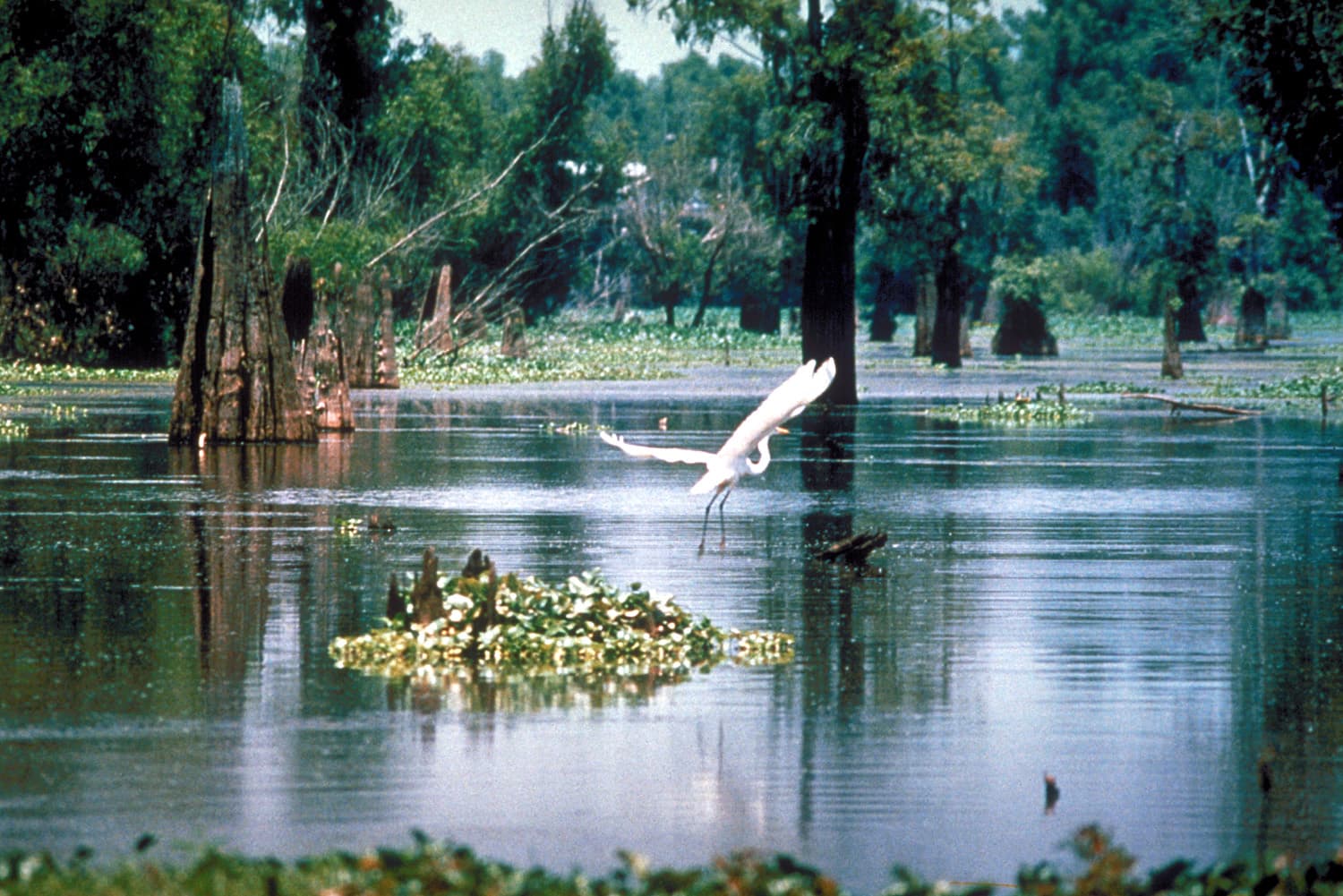
The city of New Orleans, home to approximately 360,000 people, is uniquely vulnerable. It lies predominantly below sea level within a bowl-shaped basin, situated in a rapidly diminishing river delta. Coastal Louisiana is projected to endure a relative sea level rise between 10 and 23 feet, a rate considered among the highest globally. This dire forecast could lead to the loss of an estimated 75 percent of the region's remaining wetlands and push the shoreline inland by as much as 60 to 62 miles, potentially isolating both New Orleans and Baton Rouge.
Historically, Louisiana has grappled with significant land loss, having shed around 2,000 square miles of wetlands since the 1930s. These wetlands once provided crucial natural defenses against storms. The rate of land loss is staggering, with an area the size of a football field reportedly vanishing every 100 minutes. Decades of urban development, extensive canal dredging for the oil and gas industry, and the construction of river levees have collectively weakened these vital natural protections, leaving the region increasingly exposed.
New Orleans's battle against environmental threats is well-documented, notably amplified by Hurricane Katrina in 2005. That devastating event tragically confirmed decades of scientific warnings about the city's extreme susceptibility to flooding. In the aftermath of Katrina, billions of dollars were poured into fortifying New Orleans with an intricate system of levees, floodgates, and pumps. However, the new report delivers a sobering assessment: these extensive defenses, despite requiring continuous and hefty upgrades, will ultimately prove insufficient to save the city over the long term. The study underscores the region's status as the "most physically vulnerable coastal zone in the world."
Reactions to the study have been sharply divided. Some reports suggest that the paper's authors champion a "managed retreat" as a potential opportunity for New Orleans to pioneer sustainable development and coastal restoration, thereby setting a precedent for other vulnerable global communities. Conversely, critics have decried the paper's tone as "deeply offensive" to New Orleans residents, arguing it presents "relocation" with minimal downsides and frames the impending catastrophe as an "exciting opportunity." These critics contend that abandoning the city's long-term future is "morally indefensible" and insist that New Orleans can and must be saved.
Torbjörn Törnqvist, a geology professor at Tulane University and another author of the report, noted that geological evidence from 125,000 years ago, when global temperatures mirrored today's but ocean levels were at least 10 feet higher, indicates ancient shorelines approximately 30 miles north of New Orleans. Törnqvist stated, "It's very likely that sea level will rise to that elevation in the future." While he clarified that the city would not immediately vanish and "is still going to be around by the end of the century," he acknowledged it would transform significantly due to the encroaching Gulf of Mexico. Brianna Castro, an assistant professor of urban sustainability at Yale School of the Environment and a study author, pointed out that population loss in coastal Louisiana has been a decades-long trend, with a noticeable "pulse retreat" occurring after major storms like Hurricane Katrina. Further emphasizing the city's peril, Wanyun Shao, a geographer at the University of Alabama and co-author of a separate study, highlighted that New Orleans stands out among U.S. cities, with 99 percent of its population facing a major risk of severe flooding. Timothy Dixon, an expert in coastal environments at the University of South Florida, who was not involved in the new paper, praised the study for illuminating Louisiana's significant challenge but suggested that policymakers might have benefited from considering relocation a century ago.
The ongoing environmental crisis is further complicated by recent policy decisions and legal battles. A vast sediment diversion project, initiated in August 2023 to bolster wetlands and protect south Louisiana, was controversially cancelled in 2025 by Louisiana's Republican Governor Jeff Landry, citing high costs and potential damage to fisheries. The authors of the Nature Sustainability report assert that this decision "effectively means giving up on extensive portions of coastal Louisiana, including the New Orleans area." Meanwhile, a significant legal effort to compel oil and gas companies to compensate for coastal damage faces uncertainty. The U.S. Supreme Court allowed the fossil fuel industry to federally contest a state jury decision that required Chevron to pay $740 million for harm caused to wetlands.
The study authors emphasize that any delay in implementing a managed retreat will inevitably exhaust community resources and severely worsen economic inequalities, particularly for the city's most vulnerable populations. Given that New Orleans has a majority Black population, approximately 56 percent, the stakes for equitable planning and action are profoundly high. The future of New Orleans is not just an environmental challenge, but a complex human and cultural one that demands immediate, difficult conversations about its long-term survival.