Home
Explore
Notifs
Profile

Black-owned · Built for the global diaspora · Curated pins from Black and melanated creators across hair, style, beauty, home, and art.

Formerly Melaninterest.com

m
melanin
AboutHelpTermsPrivacyCommunity GuidelinesCreators

© 2026 Melanin. All rights reserved.

Mmelanin
HomeExploreCreatorsNewsCreate
Ctrl+K
Log inSign up
Mmelanin
HomeExploreCreatorsNewsCreate
Ctrl+K
Log inSign up
Starship V3 Takes Flight: SpaceX Launches Most Advanced Rocket Yet — Melanin News | Melanin
Mmelanin
HomeExploreCreatorsNewsCreate
Ctrl+K
Log inSign up
All news
Starship V3 Takes Flight: SpaceX Launches Most Advanced Rocket YetCulture

Starship V3 Takes Flight: SpaceX Launches Most Advanced Rocket Yet

1w ago

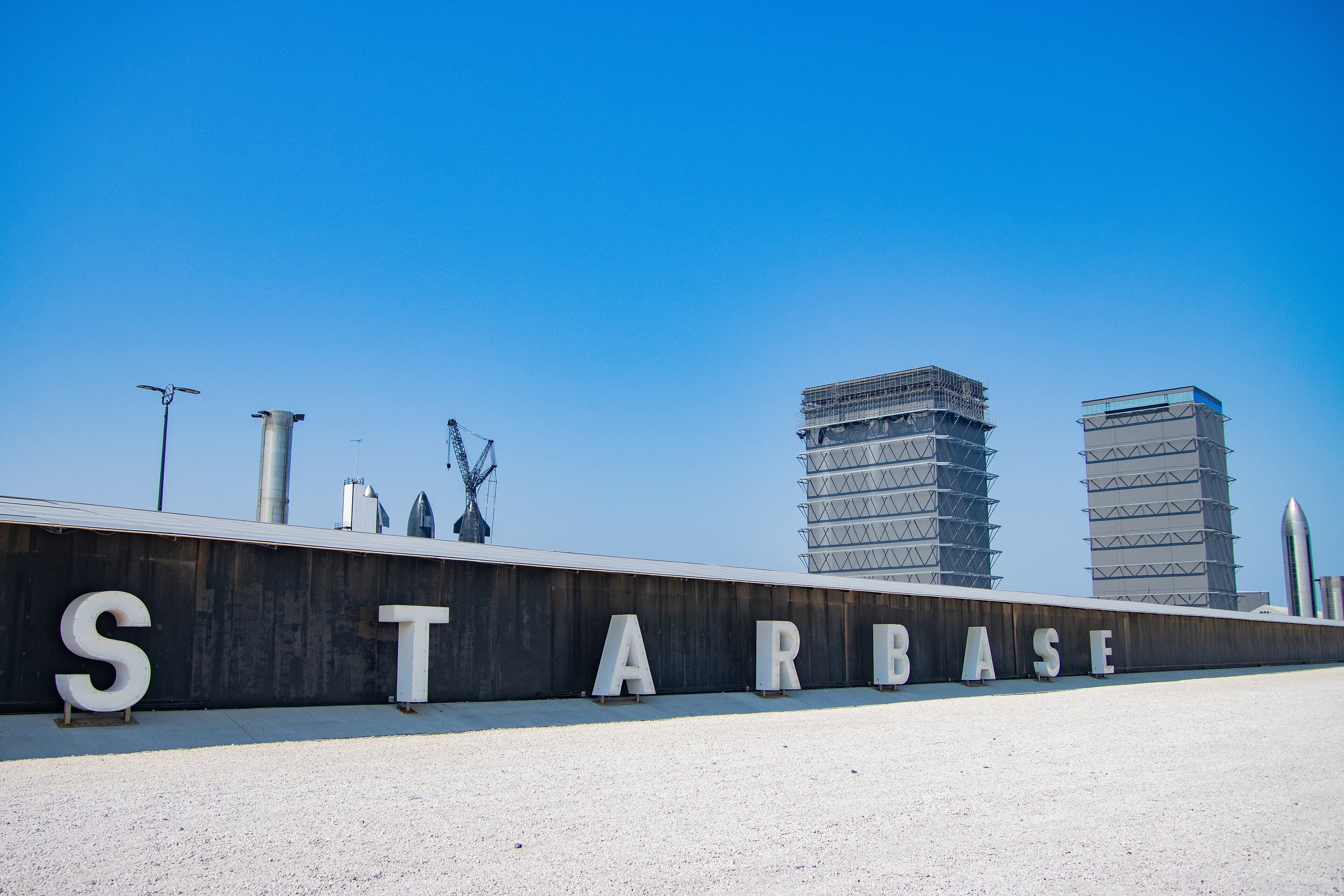
SpaceX made history this week, launching its most advanced Starship rocket to date, the Starship V3, from its Starbase test site in South Texas. The suborbital mission, designated Flight 12, opened its launch window on Thursday, May 21, 2026, at 6:30 p.m. EDT, with a revised target launch time of 7:30 p.m. ET. This event not only introduced the new V3 vehicle but also debuted Starbase's second launch pad, featuring its own set of technological advancements.

Towering at an impressive 408 feet (124 meters) when fully stacked, the Starship V3 is now the biggest and most powerful rocket ever constructed, surpassing all previous Starship iterations. Its launch comes at a pivotal moment for SpaceX, with reports indicating the company is gearing up for an initial public offering (IPO) expected next month, potentially around June 12. The success of this debut flight is widely seen as a crucial pre-IPO catalyst, potentially validating a projected valuation of around $1.75 trillion for the company.

SpaceX Starship
SpaceX Starship Source

The Starship V3 boasts significant upgrades, starting with its new V3 Raptor engines. The Super Heavy booster is equipped with 33 of these engines, while the Ship upper stage features six, all designed for increased thrust and a more streamlined operation. The Super Heavy V3 booster itself has been redesigned, now sporting three larger and stronger grid fins instead of four. These fins have been repositioned to better withstand heat during hot-staging and to improve recovery and reuse. The "hot stage ring," which connects the Super Heavy and Ship, is now integrated directly with the booster for enhanced reusability. Furthermore, the fuel transfer tube within Super Heavy has been completely overhauled, now roughly the size of a Falcon 9 first stage, allowing for the simultaneous startup of all 33 engines and boosting in-flight maneuver reliability.

The V3 Ship also underwent a "clean-sheet redesign" of its propulsion systems. This includes a new Raptor startup method, an expanded propellant tank volume, and an improved reaction control system for precision steering. Crucially for deep-space missions, it incorporates four "docking drogues" and propellant line connections for in-space refueling with tanker Ships. The vehicle's advanced avionics are designed to support a high flight rate, full reusability, and enhanced reliability, all critical for future operations.
The Flight 12 mission profile largely mirrored previous Starship test flights, involving a suborbital trajectory with controlled ocean splashdowns. The Super Heavy booster was expected to splash down in the Gulf of Mexico, while the Ship upper stage was targeted for the Indian Ocean. Notably, SpaceX clarified that it would not attempt to safely land or regain either portion of the spacecraft during this specific launch. Instead, the focus was on executing several return-flight maneuvers. Objectives for the Ship upper stage included deploying 20 Starlink simulator satellites and two specially modified Starlink V3 units, which are tasked with scanning Starship's heat shield and transmitting imagery to operators to assess its readiness for future return-to-launch-site missions. One heat shield tile was intentionally removed to measure aerodynamic load differences on adjacent tiles, and a relight of a single Raptor engine in space was also planned.

Starbase, Texas
Starbase, Texas Source

This test flight is not just about company valuation; it is central to NASA's ambitious Artemis missions, which aim to return humans to the Moon and establish a permanent lunar presence. Starship has been selected as the Human Landing System (HLS) for NASA's Artemis program, with the V3 variant expected to play a critical role in landing astronauts on the lunar surface during the Artemis 4 mission, currently targeted for late 2028. Achieving this requires Starship to reach Earth orbit, demonstrate off-Earth refueling, and be outfitted with life-support systems—a technological feat never before attempted at such a scale, potentially requiring more than ten tanker launches to fuel a single lunar mission. Don Platt, director of the Spaceport Education Center at Florida Tech, emphasized the criticality of this test, stating, "It is absolutely critical... There's no reason to have an Artemis III if there's not at least a Starship or Blue Origin lunar lander that is capable enough." NASA also has plans to develop additional launch facilities for Starship at the Kennedy Space Center in Florida.

SpaceX CEO and founder Elon Musk has been vocal about the high stakes. On Monday, May 18, he stated via X, "The Starship production pipeline is full and will complete roughly 10 more ships and about half that number of boosters this year, so, if something goes wrong, it will not be a major setback, unless the launch stand is destroyed." Musk has previously described Starship as "alien-level technology" due to its immense scale and complexity, also calling V3 a "gigantic upgrade." France Granda, a senior research analyst at PitchBook, underscored the importance from a financial perspective, noting, "For an IPO that is leaning so heavily into narrative and symbolism, we believe this fight is the single most important pre-IPO catalyst remaining on SpaceX's calendar."

This Flight 12 marks the first Starship launch in nearly seven months, following Flight 11 in October 2025. Starship's development has seen a series of test flights since April 2023, with earlier attempts yielding varied outcomes, including some explosions. The fourth flight test on June 6, 2024, was, at the time, the longest and most successful, achieving controlled splashdowns for both the rocket and spacecraft. Flight 5 was notable for being the first to achieve booster recovery, with the booster successfully caught by the launch tower arms. Flight 11, the final flight of the second-generation Starship, successfully achieved all major objectives, including hot-staging and a successful booster splashdown, setting the stage for the V3's debut.

The successful launch and initial performance of Starship V3 are pivotal for SpaceX's immediate financial future and its long-term ambitions to revolutionize space travel. The data gathered from this flight will be crucial for refining the vehicle and advancing toward its role in future lunar landings and beyond, solidifying its place in the ongoing narrative of humanity's expansion into space.