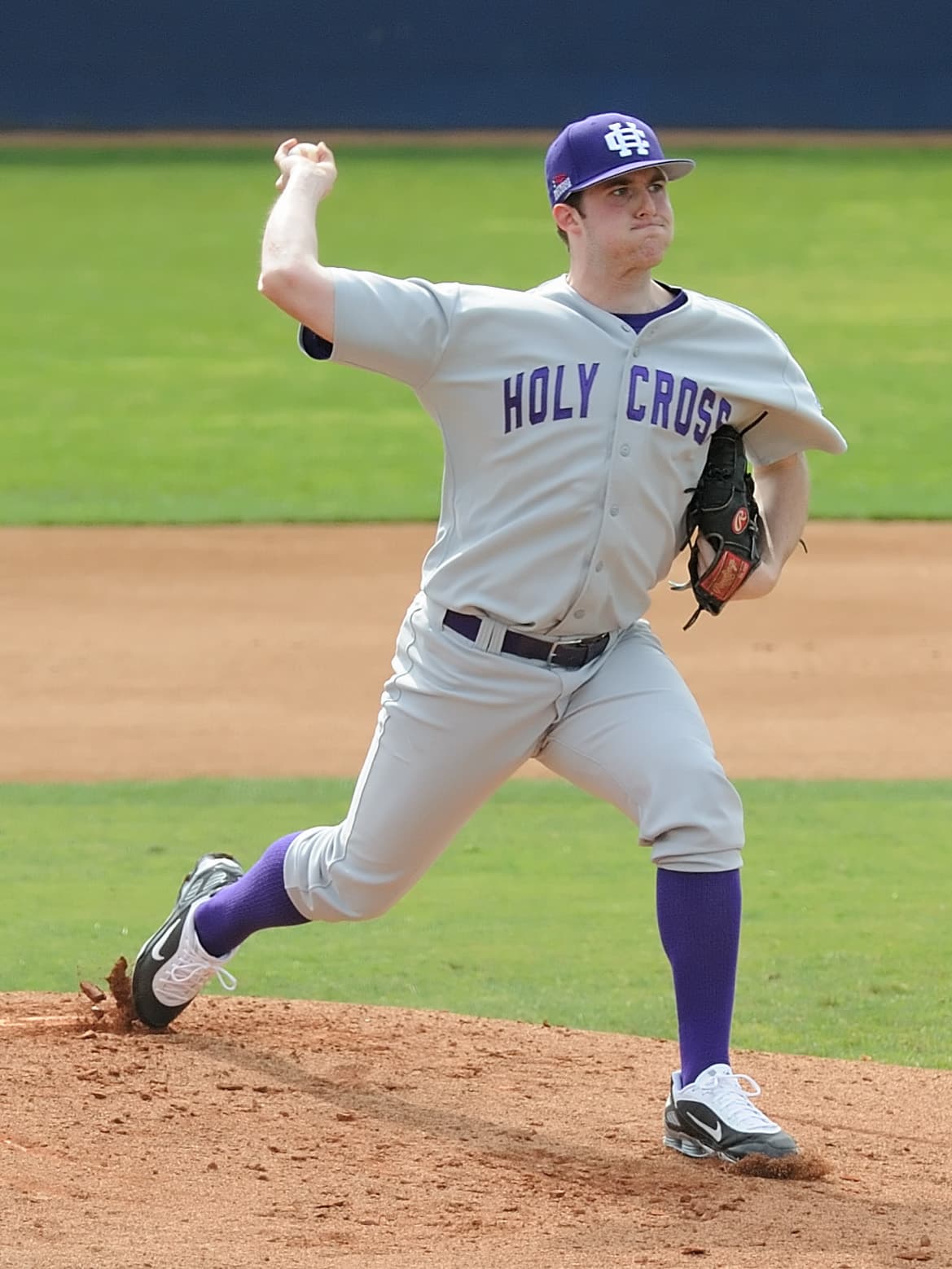
SportsThe Holy Cross Crusaders baseball squad arrived in Austin, Texas, ready to battle the nation's top college teams. What they didn't account for was a direct confrontation with the fierce Texas sun, which turned a routine practice session into an unexpected ordeal at Fisch Falk Field, just days before their NCAA Tournament regional opener.
Players struggled significantly on a sunny Thursday afternoon, unable to track fly balls against the blinding glare of the 2 p.m. sky. Reports from the practice indicated that balls were dropping untouched onto the grass, a sight highly uncharacteristic for a team that had fought its way to the NCAA Tournament. This environmental hurdle underscored a major geographical difference for the Crusaders, who hail from Worcester, Massachusetts, a region where the sun’s intensity in spring is considerably milder.
This isn't just about a bright day; it's a matter of latitude. Worcester sits at roughly 43.24 degrees north, while Austin is situated at about 30.29 degrees north. This nearly 13-degree difference means the sun's rays hit central Texas at a far more direct angle, delivering stronger solar intensity and a significantly higher dose of UV radiation than what players accustomed to New England spring weather typically encounter. Observers noted that the sun in central Texas in late May is a different beast entirely from what shines over a Patriot League game in Massachusetts.
Their journey to Austin was a testament to their grit. Despite finishing the regular season with a 25-28 record, the Holy Cross team, seeded fourth in the Patriot League Tournament, "caught fire at exactly the right moment." They defeated higher-seeded opponents to clinch the conference’s automatic bid, marking their second consecutive appearance in the NCAA Tournament—a program first in over 60 years. This achievement set the stage for their first-round matchup against the formidable sixth-ranked Texas Longhorns, scheduled for Friday, May 29, at 1 p.m. Other teams in the highly competitive Austin regional included UC Santa Barbara and Tarleton State.

The Crusaders' prior experience below the Mason-Dixon Line during the 2026 season was limited to just six games in February. At that time, the sun’s intensity was lower, and stadium angles did not present the same severe glare issues, making the Austin experience a unique challenge. This stark contrast in conditions highlighted how "geography matters in college baseball," especially when teams from different climates clash in high-stakes postseason play.

Despite the unexpected solar challenge, the team expressed readiness. Senior starting pitcher Jaden Wywoda conveyed the team's determination, stating, "It's obviously going to be a challenge, but I think this team is prepared to do anything." He added, "It's always going to be cool playing in a regional–it's what we all dream about as college baseball players. I think it's just pure excitement and we're ready to get going."
Senior center fielder CJ Egrie, who earned the Patriot League Player of the Year title and ranks nationally in stolen bases, shared a similar sentiment. He commented, "Obviously we're not scared of anybody but being able to go to Texas and play in front of that crowd, play against a team like that, it's definitely going to be a surreal experience." Coach Kahovec lauded both Wywoda and Egrie, remarking, "I cannot overemphasize how much they have meant to our program" and adding, "I cannot speak highly enough about what the two players, but more importantly those two people, have meant to the success of our program in the last three to four years."
The severe sun glare quickly became an "unexpected storyline to watch during the postseason." One report vividly described the scene, noting, "In all of my years watching college baseball, I have never seen the sun impact a team like it did Holy Cross during practice at Texas. The Crusaders could not see the ball! They were blinded by the light." This incident raised pertinent questions about whether Northeastern college baseball programs might face increased problems with sun glare when competing in Southern regions, potentially impacting game strategies and player performance.
While the sun glare was a significant issue for Holy Cross in 2026, Fisch Falk Field has seen other unrelated incidents. In May 2025, severe storms in Austin damaged the stadium's center field fence and batter's eye, though scheduled games proceeded. Additionally, Texas baseball coach Jim Schlossnagle has discussed plans to replace the turf at Disch-Falk Field in the winter of 2026 to address issues with turf speed and to implement a proper warning track, concerns entirely separate from the sun's glare.
As Holy Cross prepared for their critical matchup against the Texas Longhorns, the team faced not only a top-ranked opponent but also a unique environmental hurdle. Their resilience and determination, evident in their Patriot League championship run, would be tested not just by the competition on the diamond, but by the very elements themselves.