 Culture
YouTube Directors Disrupt Hollywood's Old Guard
Hollywood's traditional gatekeepers are facing a new challenge. A seismic shift is underway, as a fresh generation of filmmakers, forged in the digital crucible of YouTube, is not just knocking on the industry's door—they're kicking it down and rewriting the rules of the game. These creators, who once built empires of content with nothing but a camera and an internet connection, are now securing major studio deals and delivering box office hits, proving that the path to feature filmmaking no longer requires the old-school industry playbook.
Leading this charge are talents like the Australian twin brothers Danny and Michael Philippou, better known to their millions of online fans as RackaRacka. Their journey from high-octane stunt videos and chaotic short films on YouTube culminated in the critically acclaimed horror film "Talk to Me." This supernatural thriller, released in 2022, captivated audiences with its story of teenagers summoning spirits through an embalmed hand. Produced on a modest budget of $4.5 million, "Talk to Me" went on to gross an impressive $92.2 million worldwide, solidifying the brothers' transition from online sensations to legitimate feature directors. The success of their debut has paved the way for an even larger production, "Bring Her Back," slated for a 2025 release with a budget reportedly three times that of their first feature.
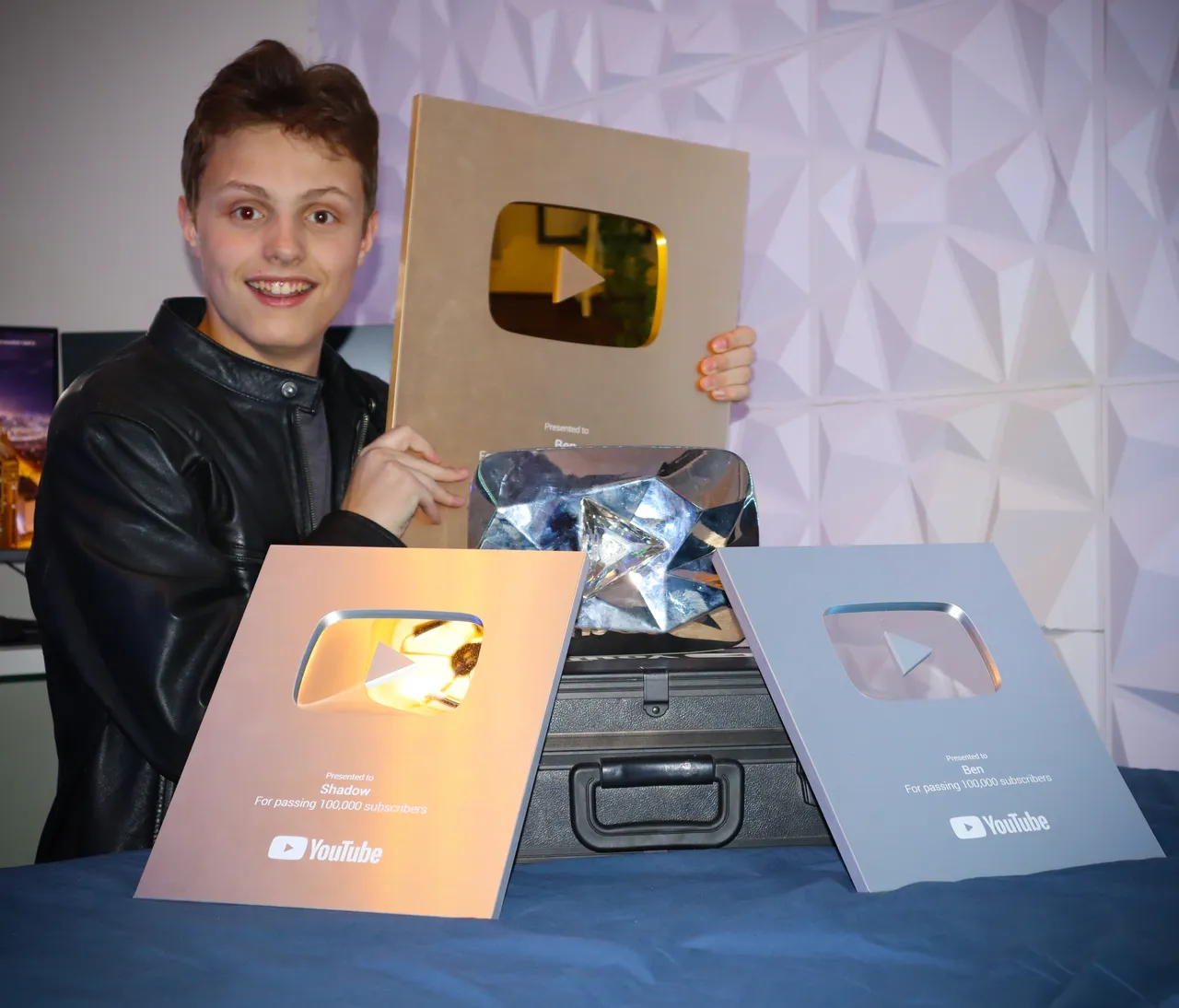
Another prominent figure making waves is Mark Fischbach, globally recognized as Markiplier. He cultivated one of YouTube's largest audiences through diverse content ranging from gaming to comedy and interactive storytelling. Fischbach’s interest in narrative filmmaking became evident through ambitious online projects such as "A Heist with Markiplier" and "In Space with Markiplier." He took a significant leap by self-funding, writing, directing, and starring in "Iron Lung," a horror film adaptation of David Szymanski's popular indie game. Premiering in theaters on January 30, 2026, the film, made for a reported $3 million, has since garnered nearly $50 million worldwide. Fischbach's independent success with "Iron Lung" has been widely cited as a "wake-up call across the industry," underscoring how a massive online following can directly translate into theatrical attendance and box office revenue.
The rising tide also includes Curry Barker, a 26-year-old filmmaker who initially built a loyal online following through short films and horror experiments on his sketch comedy YouTube channel, That's a Bad Idea. His short film "The Chair," first submitted to festivals in 2022, exploded in popularity after its YouTube upload. Barker's feature debut, "Obsession," a horror story about a music store worker and a wish-granting novelty toy, was produced for under $1 million. Its potential was quickly recognized, with Focus Features acquiring it for $15 million at the Toronto International Film Festival in 2025. "Obsession" has since grossed over $62 million domestically and is reportedly on track to hit $100 million globally. In a remarkable testament to his burgeoning influence, one studio reportedly offered Barker $10 million for his next project without even knowing the concept, a sum typically reserved for seasoned franchise directors. His upcoming slate includes a new "Texas Chainsaw Massacre" movie with A24 and another original film, "Anything But Ghosts," which is already in post-production.
Adding to this groundbreaking cohort is Kane Parsons, known online as Kane Pixels, who stands as the youngest filmmaker in this new wave. At just 20 years old, Parsons has made history as A24's youngest-ever feature director. He first gained a substantial following with his YouTube shorts based on "The Backrooms," an internet phenomenon that he brought to life with found-footage horror and impressive visual effects. His feature film adaptation of "Backrooms" was officially announced in January 2023 as a major co-production involving A24, Chernin Entertainment, 21 Laps Entertainment, and James Wan's Atomic Monster. Industry projections anticipated a massive opening, suggesting the film could earn around $60 million during its debut weekend, potentially outperforming established studio releases. These projections proved conservative, as reports on May 31, 2026, confirmed that "Backrooms" delivered an $81.5 million record-breaking A24 debut atop the North American charts, solidifying the power of internet-born narratives.

For decades, the path to a Hollywood career was rigidly defined. It typically involved years of film school, navigating complex industry connections, building a resume through short films, and tireless submissions to film festivals. This traditional pipeline was a slow and often exclusive climb, with significant barriers to entry that many described as "comically difficult." Success hinged on a carefully curated series of apprenticeships, agency representation, and often, a degree of luck and privilege.
However, the digital age has fundamentally reshaped this landscape. Platforms like YouTube have transformed into "real-time filmmaking laboratories," offering an unprecedented low barrier to entry. Here, creators don't just make videos; they simultaneously master editing, visual effects, cinematography, pacing, sound design, and, crucially, audience psychology and community-building. They can test storytelling ideas, gather immediate feedback, and organically cultivate massive fan bases, proving their commercial viability long before a studio ever invests a dime. This stands in stark contrast to a traditional Hollywood system often criticized for being formulaic, risk-averse, and overly reliant on nostalgia and established franchises.
Studios are now keenly observing a generational shift in audience engagement. Younger demographics, particularly Gen Z, are driving a significant box office comeback, with theater attendance among young people reportedly surging by 25% in 2025. These audiences, it appears, are drawn to authenticity and originality over predictable, established franchises. Kiska Higgs, President of Production and Acquisitions at Focus Features, acknowledged this new wave of talent, noting that these younger filmmakers "operate without dogma" and infuse their work with unexpected references drawn from video games and internet-born horror tales. The industry's recognition of this paradigm shift is palpable, with one studio head quoted in reports stating, "'The moment is here,' says one studio head. 'YouTube is blessing these filmmakers and we are struggling to catch up.'"
The success of these YouTube-bred filmmakers marks a profound evolution in the entertainment industry's talent pipeline. It demonstrates that the skills and instincts honed in the fast-paced, audience-driven world of online content creation are directly transferable to compelling theatrical storytelling. The era of needing a traditional film school pedigree or years as an assistant director appears to be waning, replaced by a meritocracy where talent, audience engagement, and innovative storytelling can emerge from anywhere. This trend challenges long-held assumptions about who gets to tell stories on the big screen and how they get there.
This shift isn't just about new faces; it's about a new approach to filmmaking itself. These creators bring a fresh perspective, unburdened by the conventions of old Hollywood. Their ability to connect directly with audiences, understand what resonates, and build anticipation online gives them a unique advantage. They are not just filmmakers; they are community builders, marketers, and innovators, all rolled into one. Their rise signifies a move towards greater diversity in storytelling and a more dynamic, responsive industry that is finally catching up to where audiences, particularly younger ones, are already spending their time and attention.
The remarkable box office performances and critical acclaim garnered by films from talents like RackaRacka, Markiplier, Curry Barker, and Kane Pixels are clear indicators that the entertainment industry is undergoing a fundamental transformation. As these creators continue to break records and secure lucrative deals, the message to Hollywood is undeniable: the future of filmmaking is being shaped not just in traditional studios, but increasingly, online. This ongoing narrative underscores a powerful redefinition of what it means to be a successful filmmaker in the 21st century, with the impact of the digital age reverberating through every facet of the creative landscape.